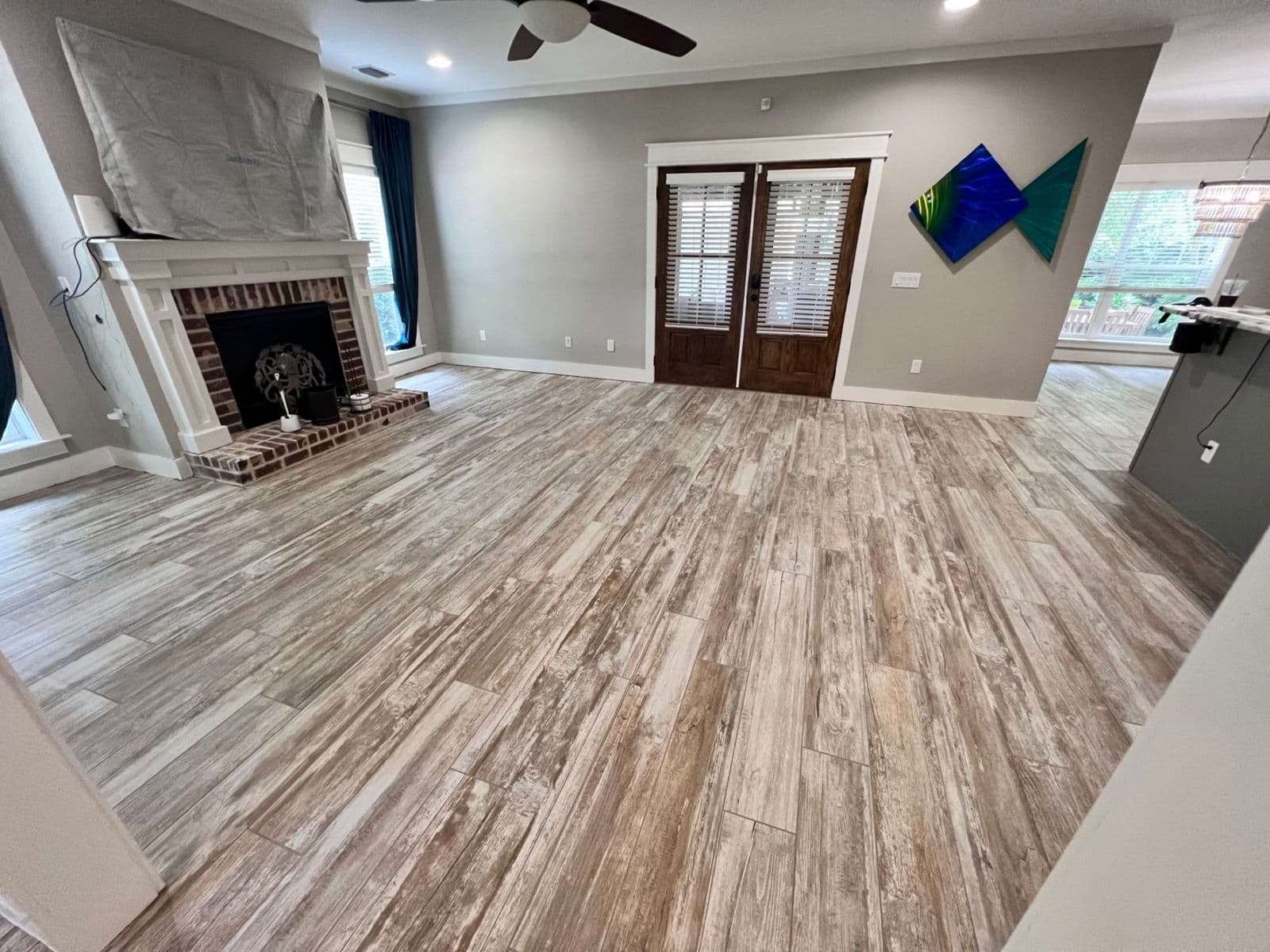
Flooring that works in Atlanta or Nashville does not always work twenty minutes from Pensacola Beach. Our humidity sits above 70 percent most of the year, slabs hold moisture, salt air moves through open doors, and sand rides in on every pair of feet. Tile and luxury vinyl plank are the two materials that handle all of that, and this guide explains how to choose between them room by room.
We install tile and luxury vinyl plank every week across Pensacola, Gulf Breeze, Pace, and Milton, so there is no bias here toward one product. The right answer usually involves both in the same house.
Tile vs. LVP at a glance for Gulf Coast conditions
Here is how porcelain tile and rigid core luxury vinyl plank compare on the things that matter in coastal Florida.
Where tile wins in a coastal home
Showers, bathroom floors, laundry rooms, mudrooms, entries, and covered patios. Anywhere water sits, sand collects, or sun bakes, porcelain tile is the better long term choice. It is also the right answer for kitchens in homes where the owner wants a stone or large format look that LVP cannot copy convincingly.
On elevated homes in Gulf Breeze and on Pensacola Beach, tile needs a stiff subfloor and an uncoupling membrane. That prep is part of our estimate, not an afterthought.
Where LVP wins in a coastal home
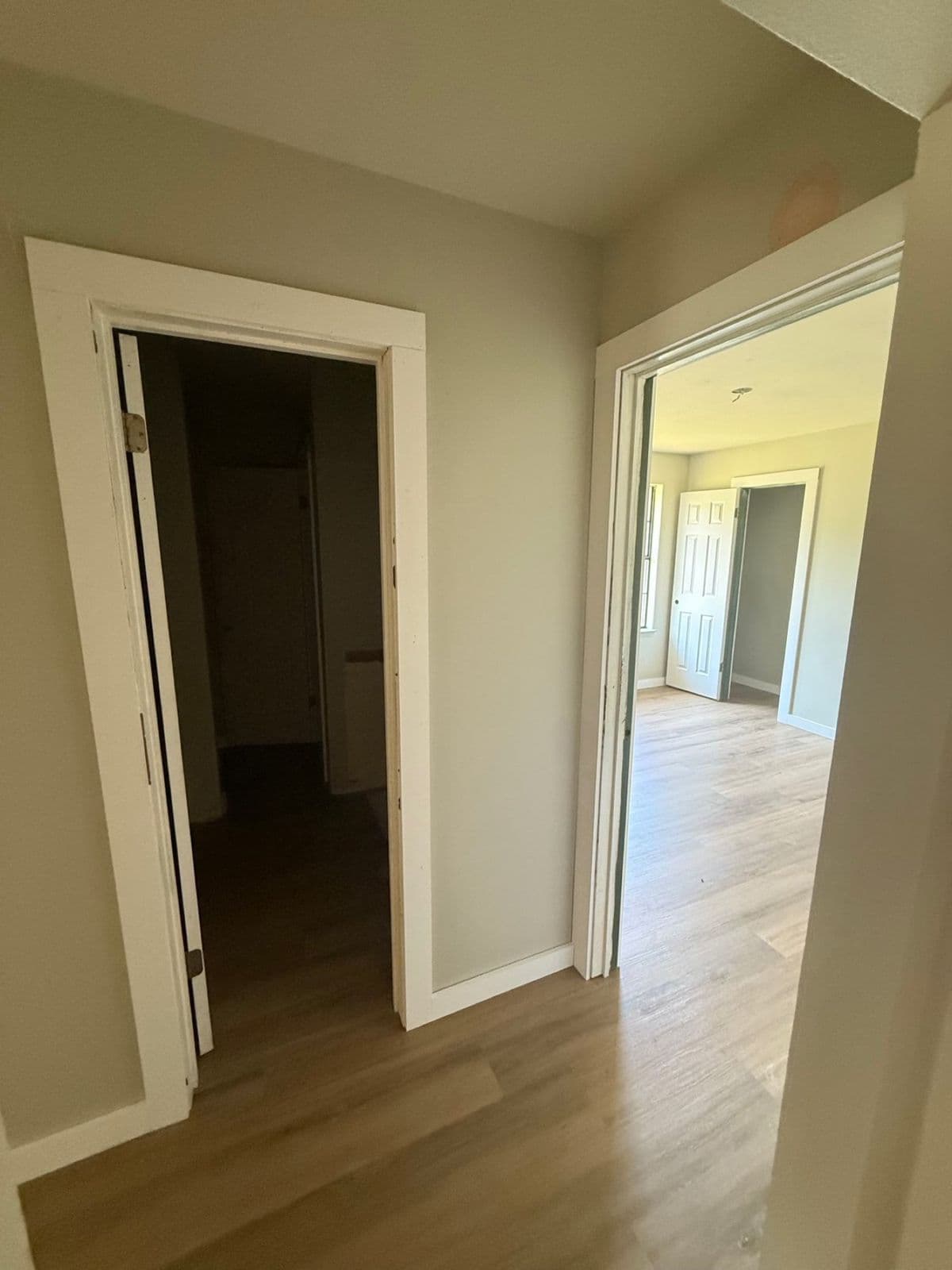
Whole home floors, bedrooms, living rooms, rentals, and any project where budget, speed, and comfort matter. Rigid core LVP with a stone composite core will not swell in humidity, installs over a flat slab in days, and is quiet and warm. Vacation rental owners in Navarre and Pensacola Beach choose it for fast turnovers.
Two cautions. First, LVP is waterproof, but the slab under it is not. We moisture test every slab and use a vapor retarder when needed so mold cannot grow underneath. Second, cheap thin planks with a 6 or 12 mil wear layer will not survive sandy traffic. We specify 20 mil or thicker.
What to avoid near the Gulf
Some products that are fine inland fail within a few seasons here.
- Laminate. The fiberboard core swells with humidity and any spill. It is the most common floor we tear out in Milton and Pace.
- Solid hardwood on slab. Pensacola slabs move too much moisture; boards cup and gap. Engineered wood is better but still needs careful acclimation.
- Peel and stick vinyl. Adhesive fails in humidity and heat, and seams lift in beach homes.
- Unsealed natural stone. Travertine and marble etch and stain with salt, sunscreen, and hard water unless sealed on a schedule.
Room by room recommendations for Pensacola area homes
- Showers and tub surrounds: porcelain tile over a bonded waterproofing membrane.
- Bathroom floors: porcelain tile, or LVP in a half bath that never sees standing water.
- Kitchen: either. Tile for a stone look and maximum durability, LVP for comfort and continuity with living areas.
- Living areas and bedrooms: rigid core LVP in most homes, tile in homes that want one continuous hard surface.
- Laundry, mudroom, entry: tile.
- Sunroom, lanai, covered patio: porcelain tile or porcelain pavers rated for exterior use.
- Vacation rentals: LVP in living and sleeping areas, tile in wet rooms and entries.
Still deciding? We bring both to your house
The fastest way to choose is to see samples on your floor in your light. Start the free estimate form or call (850) 633-8020 and we will price tile and LVP side by side in one written estimate, including prep, removal, and transitions. See both floors in our recent projects.
Ready for a real number?
See our flooring installation in Pensacola or request a free written estimate.